MECANOFAS

CONCEPTS ON WHICH OUR VENTILATED FAÇADE SYSTEMS ARE BASED

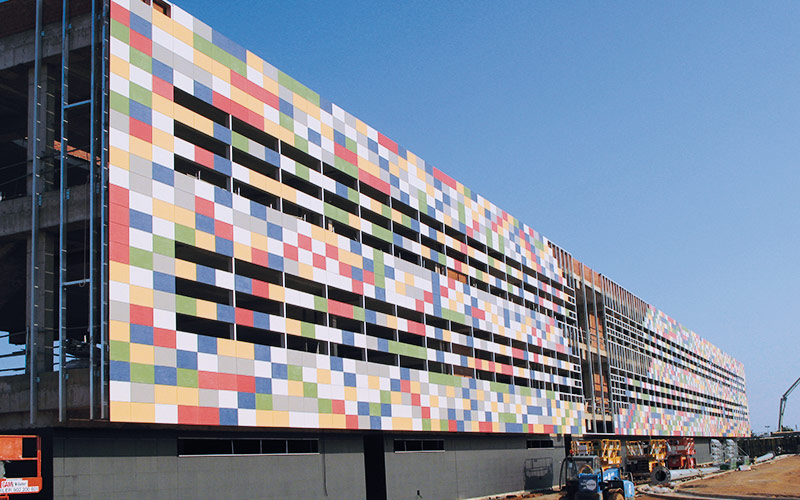
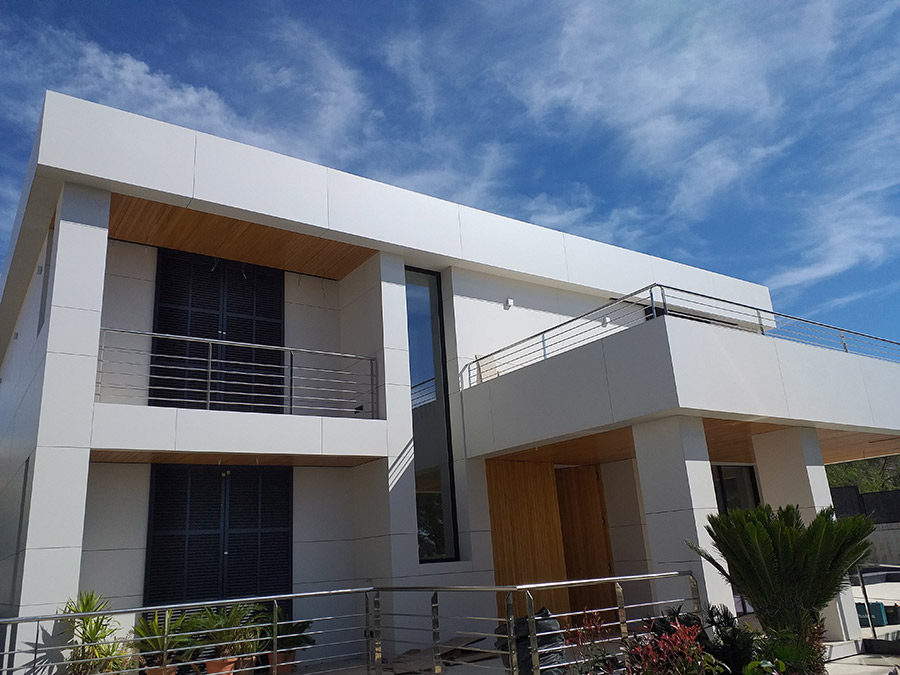
Mecanofas is a company specialized in anchoring and fixing cladding for ventilated facades.


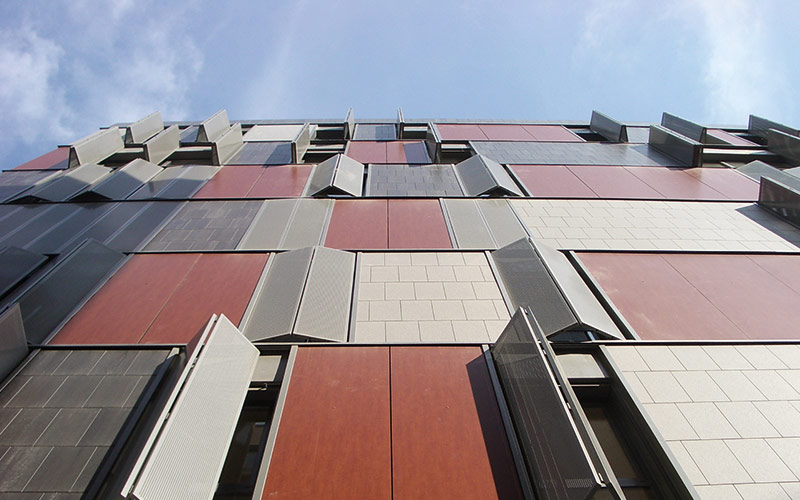
Our Systems for Anchoring and Fixing Ventilated Facade Claddings are applicable to multiple materials: Natural Stone, Porcelain Stoneware, Ceramic, Treated Wood, Aluminium, Stainless Steel, Lacquered Steel, Synthetic Materials.

ADVANTAGES OF THE FAÇADE SYSTEM WITH VENTILATED CHAMBER

The ventilated facade is an exterior cladding system with an intermediate air chamber between it and the building envelope, where air circulation is permanent and a chimney effect is created, which is due to the heating of the exterior wall and causes a variation in the density of the air layer in the chamber with respect to the ambient air, with the consequent upward movement of the air due to pressure difference.

BENEFITS

  • Energy and air conditioning savings
  • Ease of installation and maintenance
  • Registrability
  • Stability to the structure and the supporting wall
  • Risk reduction of cracks

THERMAL AND ACOUSTIC COMFORT

The exterior insulation tends, in summer and winter, to maintain the interior temperature. The indoor temperature does not fluctuate sharply despite heating, air conditioning, or spikes in temperature fluctuations.

KARRAT S-7

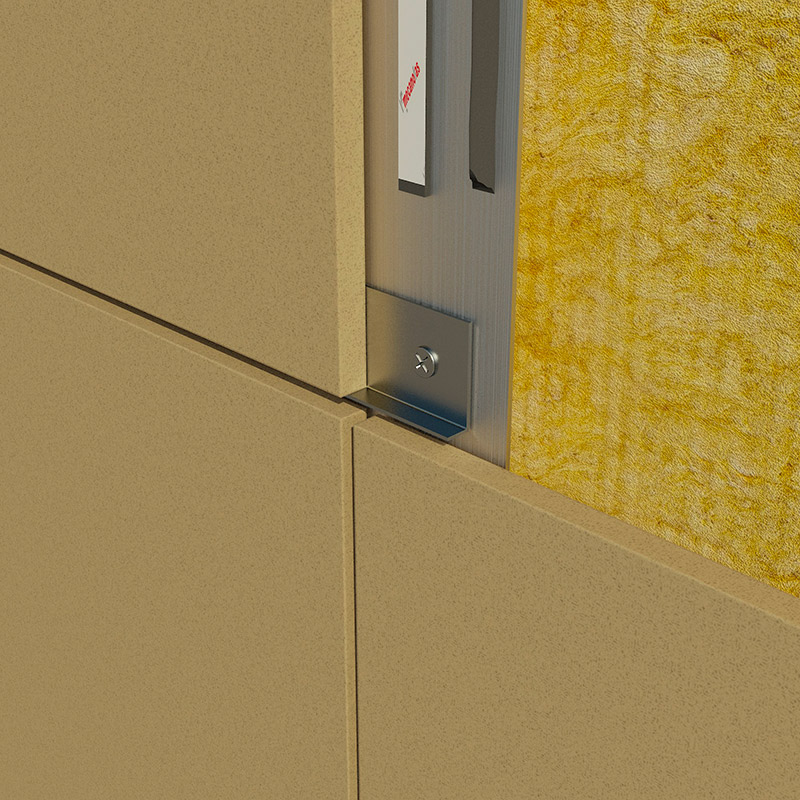
This substructure is based on a frame of aluminum profiles as vertical battens mechanically anchored to the slabs and the horizontal ones fixed to the vertical frame or directly to the enclosure. The vertical profiles (40x40x2 mm tube) have the mission of collecting the loads received by the horizontal profiles and transmitting them to the enclosure through brackets (support -slabs- and retention) that are attached to the wall by means of a fixing anchor and to the profile vertical by means of the union pin or self-drilling screw.


The mission of the horizontal profiles (double horizontal) is to collect the load transmitted by the plates (own weights and wind actions), these profiles are simply fixed on the vertical profiles with self-drilling screws. A pin joint (horizontal joint) has been designed, whose mission is to transmit the shear forces and allow the free expansion of the material, said joint will be made close to the meetings of vertical and horizontal profiles.

DGQ chemist

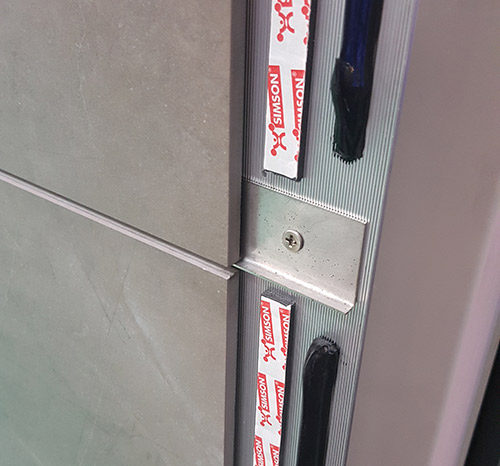
The DGQ Chemical System only needs a special adhesive punctually supported with small staples and double-sided tape.

For the rest, the vertical structure has the following characteristics:


  • Support Brackets
  • Retention Brackets
  • T-profile
  • L-profile